Iran’s MMA Revolution: The Rise of a New Generation
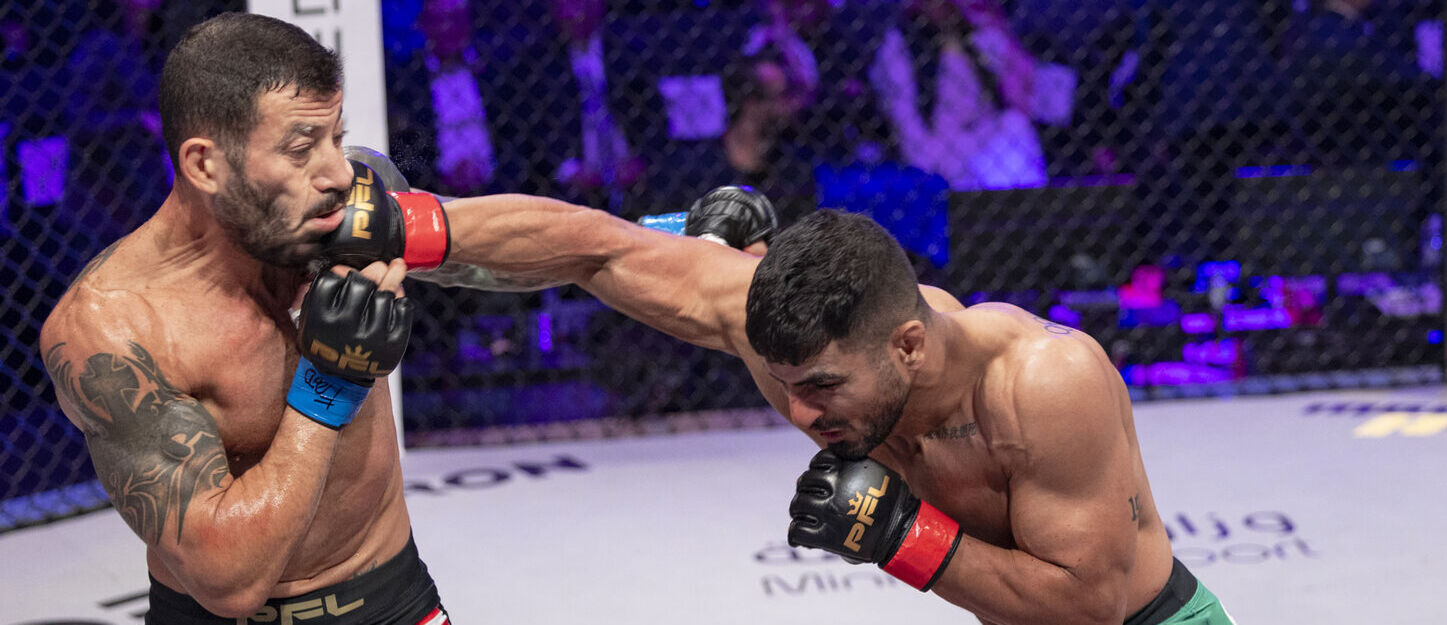
The growth of MMA in Iran is no longer just a story about fighters — it is about infrastructure, education and governance, from the national federation to the path onto the world stage.
For decades, Iran's identity in combat sports was almost synonymous with wrestling.
The country has produced generations of Olympic and world champions, creating a culture in which grappling, toughness and competitive fighting are deeply established. But in recent years, another combat sport has begun to emerge from that tradition.
Mixed martial arts is growing in Iran — and the foundations of that growth are increasingly being built at the amateur and national level.
At the center of that development is the Iranian MMA Federation (IRMMAF) and its president, Majid Alinejad.
According to the International Mixed Martial Arts Federation, IRMMAF is the recognized Iranian national federation within IMMAF, with Alinejad listed as its president. (IMMAF)
For a country with such a formidable combat-sports tradition, the significance of that structure cannot be overstated.
## Building MMA From the Ground Up
The biggest challenge for an emerging MMA nation is not simply producing fighters.
It is creating a system.
Young athletes need somewhere to compete. Coaches need education. Officials need training. National championships need to be organized. Fighters need a pathway from local competition to international events.
That is precisely the type of infrastructure IMMAF is designed to support.
The international federation describes national federations as organizations responsible for developing amateur MMA, including coach and referee education, national competitions, athlete development and selection of national teams for international championships. (IMMAF)
That framework is increasingly visible in Iran.
Under Alinejad's leadership, the Iranian federation has been promoting national IMMAF competitions and coach education. Publicly available information associated with Alinejad shows the federation organizing national championships for junior, youth and senior athletes, while an IMMAF report highlighted a coaching course in Iran attended by 24 coaches. (LinkedIn)
Those may sound like small steps compared with the spectacle of a UFC main event.
They are not.
For MMA to become sustainable in Iran, these are the steps that matter most.
## Majid Alinejad and a New Institutional Era
Alinejad's importance comes from his role in helping give Iranian MMA an organized national structure.
The international recognition matters.
IMMAF currently lists Iran among its national federations, while Alinejad has also been elected as a director of the Asia MMA Federation. His appointment came during the federation's 2024 General Assembly, placing an Iranian representative inside the wider Asian MMA leadership structure. (IMMAF)
That is an important development.
Iran is not simply producing athletes who leave the country and pursue careers overseas.
It is increasingly becoming part of the international amateur MMA governance system itself.
And that gives Iranian fighters a pathway that previous generations largely did not have.
## The Wissam Abi Nader Factor
Another name deserves particular attention when discussing the development of MMA across the region: Wissam Abi Nader.
The Lebanese martial artist and administrator has spent years helping develop MMA in the Middle East. He founded Lebanon's first MMA club and played a leading role in establishing the Lebanese MMA Committee. IMMAF appointed him to its board in 2024 after previously serving as the organization's Asia Director, and he became interim Vice-President. (IMMAF)
Abi Nader's importance extends beyond Lebanon.
His work has helped create stronger connections between Middle Eastern and Asian MMA communities and the international amateur system. That regional network is particularly valuable for countries such as Iran, where the sport is still building its international infrastructure.
In 2026, Abi Nader continued to serve as an IMMAF Vice President, including involvement in the federation's championship-hosting strategy and its efforts to give member federations greater opportunities to stage international competitions. (IMMAF)
That kind of leadership matters because the growth of MMA is no longer just about finding talented fighters.
It is about connecting those fighters to the world.
## Iran's Natural MMA Advantage
If Iran can build the right infrastructure, it has one enormous advantage:
the talent pool already exists.
Iranian wrestling is world class.
The country has also produced elite practitioners of boxing, kickboxing, karate, judo, Sanda and other combat disciplines. MMA essentially asks athletes to combine many of those skill sets.
The challenge is converting that raw combat-sports talent into complete MMA fighters.
A young Iranian wrestler who learns effective striking, submission grappling, cage wrestling and MMA-specific conditioning can become an entirely different athlete.
That is where a properly organized amateur system becomes so important.
Instead of a talented 18-year-old fighter attempting to jump directly into professional MMA, the athlete can develop through structured amateur competition, learn the rules and safety standards, gain international experience and eventually transition into the professional ranks.
That is the pathway that has helped build MMA programs around the world.
And Iran is now building toward the same model.
## From National Championships to the World Stage
The significance of Iran's national IMMAF activity should therefore not be judged purely by medal counts.
The bigger story is the creation of a pipeline.
Iranian national competitions give young fighters the opportunity to identify themselves.
National-team selection gives the best athletes an international target.
IMMAF's World and Continental Championships then provide the opportunity to compete against the strongest amateur fighters from other nations. IMMAF describes these championships as a central part of its international athlete-development system. (IMMAF)
For Iranian fighters, that international exposure can be transformational.
A fighter who succeeds at the amateur level can attract coaches, managers and professional promotions from outside Iran.
Eventually, the pathway can look something like this:
Iranian club → national championship → IMMAF competition → international amateur success → professional MMA → major promotion.
That is how a country's MMA ecosystem is built.
## The Next Generation
Iran has already produced fighters who have reached major international promotions.
Names such as Amir Aliakbari, Hatef Moeil, Reza Madadi, Amir Fazli and Mohsen Mohammadseifi have demonstrated that Iranian combat athletes can compete and win at the highest levels of professional MMA.
But the next generation could be different.
They may grow up with MMA as a legitimate sporting discipline rather than something they discover after becoming successful in another combat sport.
That distinction could be enormous.
Instead of transitioning from wrestling or another martial art into MMA in their twenties, future Iranian prospects could spend their formative years learning MMA itself.
If that happens, the ceiling for Iranian MMA could rise dramatically.
## The Bigger Picture
The story of MMA in Iran is therefore not simply a story about fighters.
It is a story about infrastructure, education, governance and international cooperation.
Majid Alinejad and the Iranian MMA Federation represent the domestic side of that equation, building national structures and competitions.
Wissam Abi Nader represents the wider regional and international side, helping connect Middle Eastern MMA to the global IMMAF structure.
And above them sits an international federation whose stated mission is to develop MMA from grassroots participation through elite amateur competition while improving safety, governance and recognition of the sport. (IMMAF)
The professional champions may eventually receive the headlines.
But before a fighter can become a world champion, somebody has to build the pathway that gets them there.
Iran is beginning to build that pathway.
And if the country's extraordinary combat-sports talent can be combined with the right MMA education, competition and international experience, the fighters emerging from Iran over the next decade could look very different from those who came before them.
The Iranian MMA story may have already begun.
But the most important chapter could still be ahead.
The country has produced generations of Olympic and world champions, creating a culture in which grappling, toughness and competitive fighting are deeply established. But in recent years, another combat sport has begun to emerge from that tradition.
Mixed martial arts is growing in Iran — and the foundations of that growth are increasingly being built at the amateur and national level.
At the center of that development is the Iranian MMA Federation (IRMMAF) and its president, Majid Alinejad.
According to the International Mixed Martial Arts Federation, IRMMAF is the recognized Iranian national federation within IMMAF, with Alinejad listed as its president. (IMMAF)
For a country with such a formidable combat-sports tradition, the significance of that structure cannot be overstated.
## Building MMA From the Ground Up
The biggest challenge for an emerging MMA nation is not simply producing fighters.
It is creating a system.
Young athletes need somewhere to compete. Coaches need education. Officials need training. National championships need to be organized. Fighters need a pathway from local competition to international events.
That is precisely the type of infrastructure IMMAF is designed to support.
The international federation describes national federations as organizations responsible for developing amateur MMA, including coach and referee education, national competitions, athlete development and selection of national teams for international championships. (IMMAF)
That framework is increasingly visible in Iran.
Under Alinejad's leadership, the Iranian federation has been promoting national IMMAF competitions and coach education. Publicly available information associated with Alinejad shows the federation organizing national championships for junior, youth and senior athletes, while an IMMAF report highlighted a coaching course in Iran attended by 24 coaches. (LinkedIn)
Those may sound like small steps compared with the spectacle of a UFC main event.
They are not.
For MMA to become sustainable in Iran, these are the steps that matter most.
## Majid Alinejad and a New Institutional Era
Alinejad's importance comes from his role in helping give Iranian MMA an organized national structure.
The international recognition matters.
IMMAF currently lists Iran among its national federations, while Alinejad has also been elected as a director of the Asia MMA Federation. His appointment came during the federation's 2024 General Assembly, placing an Iranian representative inside the wider Asian MMA leadership structure. (IMMAF)
That is an important development.
Iran is not simply producing athletes who leave the country and pursue careers overseas.
It is increasingly becoming part of the international amateur MMA governance system itself.
And that gives Iranian fighters a pathway that previous generations largely did not have.
## The Wissam Abi Nader Factor
Another name deserves particular attention when discussing the development of MMA across the region: Wissam Abi Nader.
The Lebanese martial artist and administrator has spent years helping develop MMA in the Middle East. He founded Lebanon's first MMA club and played a leading role in establishing the Lebanese MMA Committee. IMMAF appointed him to its board in 2024 after previously serving as the organization's Asia Director, and he became interim Vice-President. (IMMAF)
Abi Nader's importance extends beyond Lebanon.
His work has helped create stronger connections between Middle Eastern and Asian MMA communities and the international amateur system. That regional network is particularly valuable for countries such as Iran, where the sport is still building its international infrastructure.
In 2026, Abi Nader continued to serve as an IMMAF Vice President, including involvement in the federation's championship-hosting strategy and its efforts to give member federations greater opportunities to stage international competitions. (IMMAF)
That kind of leadership matters because the growth of MMA is no longer just about finding talented fighters.
It is about connecting those fighters to the world.
## Iran's Natural MMA Advantage
If Iran can build the right infrastructure, it has one enormous advantage:
the talent pool already exists.
Iranian wrestling is world class.
The country has also produced elite practitioners of boxing, kickboxing, karate, judo, Sanda and other combat disciplines. MMA essentially asks athletes to combine many of those skill sets.
The challenge is converting that raw combat-sports talent into complete MMA fighters.
A young Iranian wrestler who learns effective striking, submission grappling, cage wrestling and MMA-specific conditioning can become an entirely different athlete.
That is where a properly organized amateur system becomes so important.
Instead of a talented 18-year-old fighter attempting to jump directly into professional MMA, the athlete can develop through structured amateur competition, learn the rules and safety standards, gain international experience and eventually transition into the professional ranks.
That is the pathway that has helped build MMA programs around the world.
And Iran is now building toward the same model.
## From National Championships to the World Stage
The significance of Iran's national IMMAF activity should therefore not be judged purely by medal counts.
The bigger story is the creation of a pipeline.
Iranian national competitions give young fighters the opportunity to identify themselves.
National-team selection gives the best athletes an international target.
IMMAF's World and Continental Championships then provide the opportunity to compete against the strongest amateur fighters from other nations. IMMAF describes these championships as a central part of its international athlete-development system. (IMMAF)
For Iranian fighters, that international exposure can be transformational.
A fighter who succeeds at the amateur level can attract coaches, managers and professional promotions from outside Iran.
Eventually, the pathway can look something like this:
Iranian club → national championship → IMMAF competition → international amateur success → professional MMA → major promotion.
That is how a country's MMA ecosystem is built.
## The Next Generation
Iran has already produced fighters who have reached major international promotions.
Names such as Amir Aliakbari, Hatef Moeil, Reza Madadi, Amir Fazli and Mohsen Mohammadseifi have demonstrated that Iranian combat athletes can compete and win at the highest levels of professional MMA.
But the next generation could be different.
They may grow up with MMA as a legitimate sporting discipline rather than something they discover after becoming successful in another combat sport.
That distinction could be enormous.
Instead of transitioning from wrestling or another martial art into MMA in their twenties, future Iranian prospects could spend their formative years learning MMA itself.
If that happens, the ceiling for Iranian MMA could rise dramatically.
## The Bigger Picture
The story of MMA in Iran is therefore not simply a story about fighters.
It is a story about infrastructure, education, governance and international cooperation.
Majid Alinejad and the Iranian MMA Federation represent the domestic side of that equation, building national structures and competitions.
Wissam Abi Nader represents the wider regional and international side, helping connect Middle Eastern MMA to the global IMMAF structure.
And above them sits an international federation whose stated mission is to develop MMA from grassroots participation through elite amateur competition while improving safety, governance and recognition of the sport. (IMMAF)
The professional champions may eventually receive the headlines.
But before a fighter can become a world champion, somebody has to build the pathway that gets them there.
Iran is beginning to build that pathway.
And if the country's extraordinary combat-sports talent can be combined with the right MMA education, competition and international experience, the fighters emerging from Iran over the next decade could look very different from those who came before them.
The Iranian MMA story may have already begun.
But the most important chapter could still be ahead.