Reza Madadi: The Iranian Pioneer Who Helped Build a European MMA Powerhouse
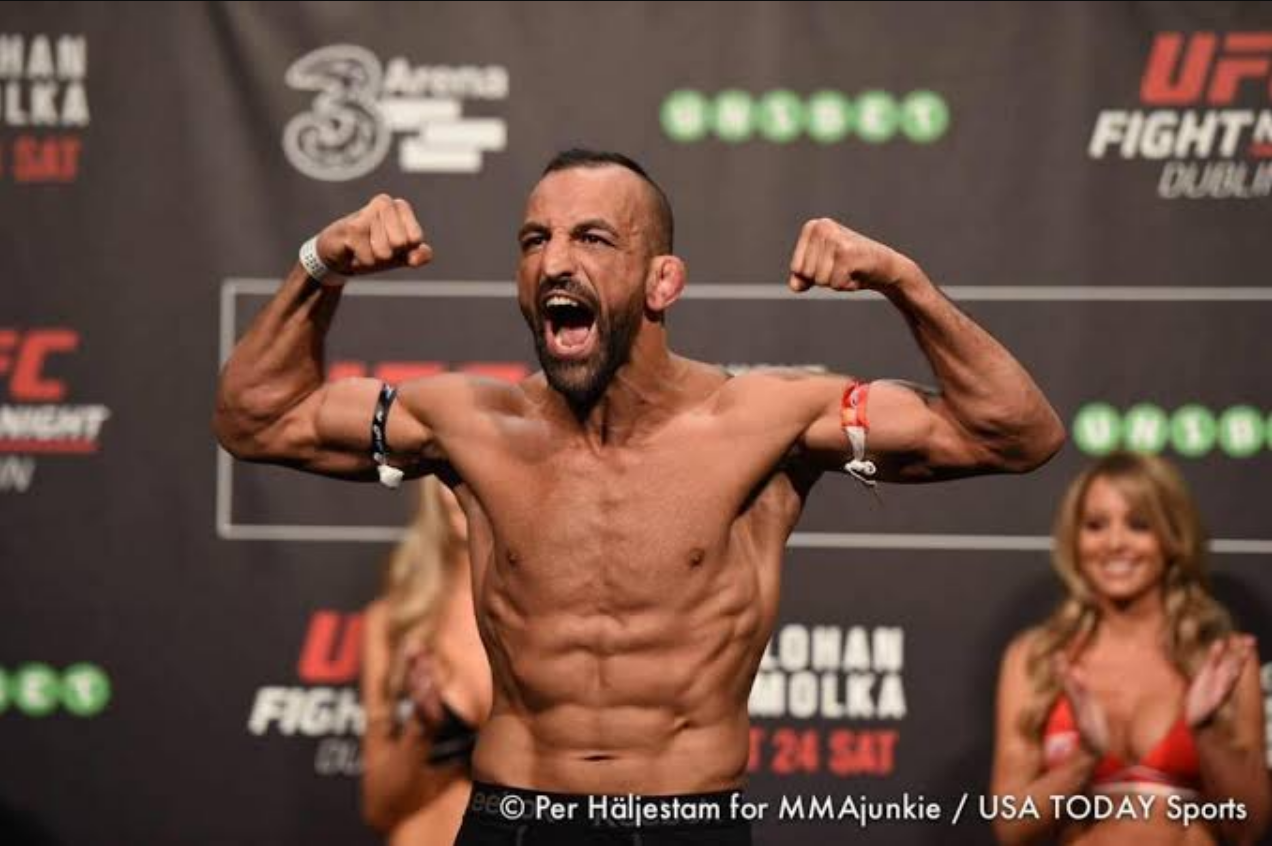
From Tehran to the UFC Octagon and on to building Allstars Spain, Reza “Mad Dog” Madadi left a legacy far larger than his win-loss record.
There are fighters who win titles, fighters who headline major events, and fighters whose influence extends well beyond their own record. Reza “Mad Dog” Madadi belongs firmly in that third category. Born in Tehran, he built his professional career in Sweden before reaching the UFC lightweight division, finishing with a 14-6 record that includes eight submission wins, and a debut that came in April 2012.
## From Tehran to the UFC
Madadi’s foundation was wrestling. He competed in Swedish wrestling and established himself as a serious grappler before moving fully into MMA, where aggressive takedowns, relentless pressure and a dangerous submission game became his signature. His UFC debut against Yoislandy Izquierdo saw him hurt early before recovering to win by second-round guillotine. His signature night came in Stockholm in April 2013: Michael Johnson nearly finished him with a head kick, but Madadi turned the fight around with his wrestling and won by third-round brabo choke — hurt, exhausted, but refusing to quit.
## More Than an Iranian Fighter
Madadi’s importance to Iranian MMA cannot be measured by belts alone. He was competing internationally at a time when Iranian MMA had none of today’s infrastructure or visibility, and no established pipeline into the major global promotions. He was part of the generation that changed that perception, proving an Iranian-born fighter could develop abroad and reach the top. Today, fighters such as Amir Aliakbari, Hatef Moeil, Mohsen Mohammadseifi and Amir Fazli compete along the path his generation helped open.
## The Difficult Chapter
His career also held one of the hardest periods of his life. In 2013 he was convicted in Sweden in connection with a robbery and sentenced to 18 months in prison, maintaining his innocence throughout. The UFC first suspended and then terminated his contract. For many that would have been the end; for Madadi it became another chapter defined by resilience. He returned after serving his time, regained his UFC place, and went on to defeat Yan Cabral, Joseph Duffy and Joaquim Silva, with his final bout coming against Silva in May 2017. He retired from competition in 2019.
## From Fighter to Builder: Allstars Spain
Retirement didn’t take Madadi away from MMA — it changed his role within it. He became closely involved with Allstars Training Center, the Swedish powerhouse, and helped bring the Allstars model to Spain with a new facility in Torrevieja, Alicante. The original idea was his, using his Swedish connections to bring the brand and elite fighters to Spain. Names including Khamzat Chimaev, Alexander Gustafsson and Darren Till have trained there, with Madadi serving as a head coach.
## A European Legacy for Iranian MMA
Born in Tehran, developed in Sweden, tested against some of the world’s best lightweights, and reinvented as a coach and gym builder, Madadi leaves a legacy larger than his win-loss record. He was one of the pioneers who proved Iranian fighters belong on the international MMA stage — and through Allstars Spain, he is now helping build the stage for the fighters who come next.
## From Tehran to the UFC
Madadi’s foundation was wrestling. He competed in Swedish wrestling and established himself as a serious grappler before moving fully into MMA, where aggressive takedowns, relentless pressure and a dangerous submission game became his signature. His UFC debut against Yoislandy Izquierdo saw him hurt early before recovering to win by second-round guillotine. His signature night came in Stockholm in April 2013: Michael Johnson nearly finished him with a head kick, but Madadi turned the fight around with his wrestling and won by third-round brabo choke — hurt, exhausted, but refusing to quit.
## More Than an Iranian Fighter
Madadi’s importance to Iranian MMA cannot be measured by belts alone. He was competing internationally at a time when Iranian MMA had none of today’s infrastructure or visibility, and no established pipeline into the major global promotions. He was part of the generation that changed that perception, proving an Iranian-born fighter could develop abroad and reach the top. Today, fighters such as Amir Aliakbari, Hatef Moeil, Mohsen Mohammadseifi and Amir Fazli compete along the path his generation helped open.
## The Difficult Chapter
His career also held one of the hardest periods of his life. In 2013 he was convicted in Sweden in connection with a robbery and sentenced to 18 months in prison, maintaining his innocence throughout. The UFC first suspended and then terminated his contract. For many that would have been the end; for Madadi it became another chapter defined by resilience. He returned after serving his time, regained his UFC place, and went on to defeat Yan Cabral, Joseph Duffy and Joaquim Silva, with his final bout coming against Silva in May 2017. He retired from competition in 2019.
## From Fighter to Builder: Allstars Spain
Retirement didn’t take Madadi away from MMA — it changed his role within it. He became closely involved with Allstars Training Center, the Swedish powerhouse, and helped bring the Allstars model to Spain with a new facility in Torrevieja, Alicante. The original idea was his, using his Swedish connections to bring the brand and elite fighters to Spain. Names including Khamzat Chimaev, Alexander Gustafsson and Darren Till have trained there, with Madadi serving as a head coach.
## A European Legacy for Iranian MMA
Born in Tehran, developed in Sweden, tested against some of the world’s best lightweights, and reinvented as a coach and gym builder, Madadi leaves a legacy larger than his win-loss record. He was one of the pioneers who proved Iranian fighters belong on the international MMA stage — and through Allstars Spain, he is now helping build the stage for the fighters who come next.